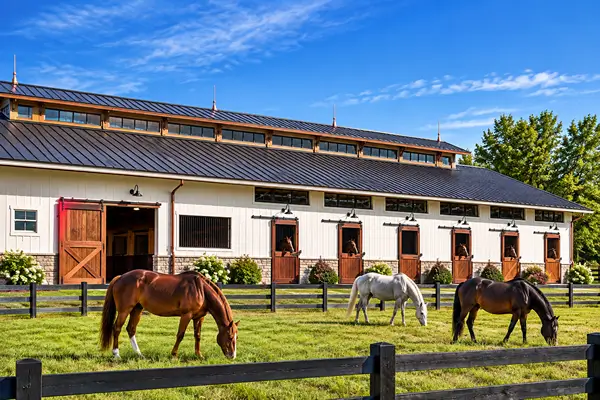
Colorado is home to thousands of ranches, farms, horse properties and equestrian facilities. From large ranches and agricultural operations to private horse barns and rural estates, these properties often include multiple structures spread across open land.
That setting can also create unique concerns when thunderstorms move through the area. Barns, stables, riding facilities, equipment buildings and other structures may stand in relatively exposed locations, making lightning protection an important consideration for Colorado agricultural and equestrian property owners.
At Deseret Lightning Protection, we provide professionally designed lightning protection systems for barns, ranches, farms and equestrian properties throughout Colorado.
Why Lightning Protection Matters for Colorado Agricultural Properties
Lightning is a familiar part of Colorado’s weather. National Weather Service historical data shows that lightning activity increases substantially during the warmer months, particularly during Colorado’s summer thunderstorm season. National Weather Service
For a ranch or equestrian property, the concern isn’t necessarily limited to one building. A property may contain:
- Horse barns and stables
- Riding arenas
- Agricultural barns
- Equipment and machinery buildings
- Workshops
- Storage structures
- Livestock facilities
- Farm buildings
- Ranch homes
- Other detached structures
Each structure has its own size, construction, location and exposure, which is why lightning protection for a ranch or farm should be evaluated based on the individual property.
Barns and Stables Can Be Especially Exposed
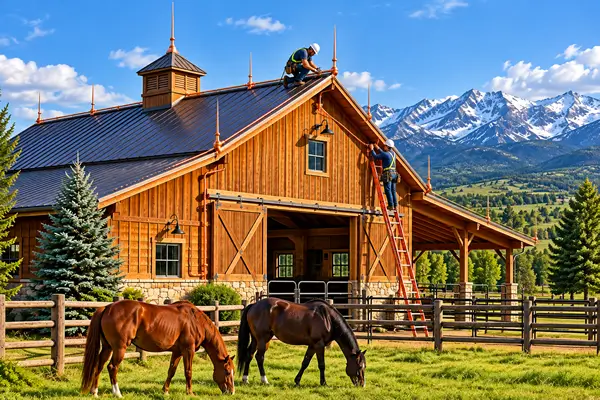
Many barns and agricultural buildings are located in open areas with relatively few surrounding structures.
Some may also have large roof areas, cupolas, weather vanes, rooftop equipment or other elevated features. A professional lightning protection system is designed to intercept a lightning strike and provide a controlled path for lightning current toward the earth.
A complete system involves much more than simply installing a lightning rod on top of a barn.
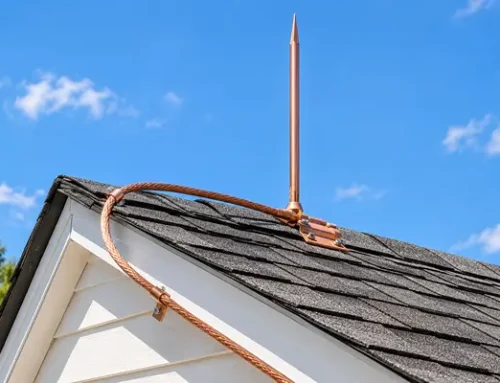
Depending upon the structure, a system can incorporate air terminals, conductors, bonding and grounding components designed to work together as a complete lightning protection system.
Lightning Protection for Colorado Horse Properties
Colorado has a strong equestrian community, from private horse properties to larger ranches, breeding operations, boarding facilities and riding centers.
Lightning protection may be appropriate for structures such as:
Horse Barns and Stables
Barns containing horses, feed, tack and equipment can represent a significant investment for their owners.
Indoor Riding Arenas
Large riding facilities can have substantial roof areas and may be among the larger structures on an equestrian property.
Equipment and Storage Buildings
Tractors, trailers, farm machinery and other valuable equipment may be stored in separate buildings.
Workshops and Utility Buildings
Ranches frequently contain workshops and support structures that should be considered when evaluating the overall property.
Ranch Residences
The residence itself can also be evaluated separately for a residential lightning protection system.
Protecting Livestock Is Another Consideration
Lightning doesn’t have to directly strike an animal to be dangerous. The National Weather Service explains that ground current from a nearby lightning strike can be particularly dangerous to large farm animals because of the distance between their contact points with the ground.
A lightning protection system on a barn does not make an entire outdoor ranch or pasture lightning-safe. However, professionally protecting important structures can be one part of a broader approach to lightning risk on an agricultural property.
Colorado has unfortunately experienced the consequences of lightning on ranch properties. In May 2024, a rancher and 34 head of livestock were killed by a lightning strike in Jackson County, according to National Weather Service records.
A Lightning Rod Alone Is Not a Complete Lightning Protection System
One of the common misconceptions about lightning protection is that putting a single lightning rod on the highest point of a barn provides complete protection.
Modern lightning protection involves an interconnected system.
A professionally designed system provides a controlled route for lightning current to travel from the strike interception points through conductors and ultimately to the grounding system.
The exact configuration depends upon the building.
That’s particularly important for agricultural properties because a metal barn, traditional wood barn, large riding arena and ranch residence may require very different approaches.
What About Metal Barns?
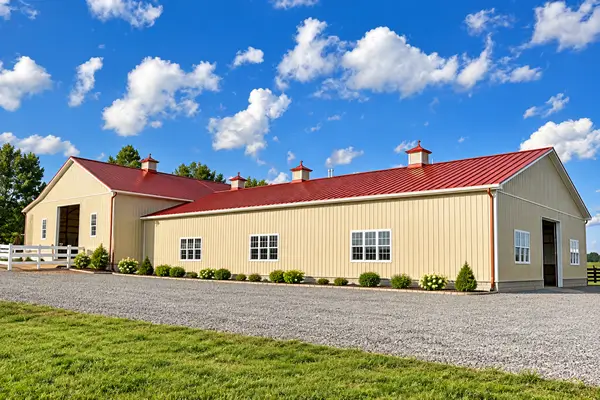
Having a metal roof does not automatically mean a building has a complete lightning protection system.
Likewise, metal itself doesn’t attract lightning. The National Weather Service notes that metal can provide a path for electrical current to travel, which is one reason proper bonding and system design matter.
If you own a metal barn, riding arena, workshop or agricultural building, the structure can be evaluated to determine the appropriate lightning protection approach.
Lightning Protection for New Barn Construction
If you’re planning a new barn, stable, arena or agricultural building in Colorado, the construction phase is an excellent time to consider lightning protection.
Planning the system early allows the lightning protection contractor to coordinate installation with the builder, roofer and other contractors.
Components can often be incorporated into the construction process rather than installing everything after the building has been completed.
Deseret Lightning Protection works with property owners, builders and contractors on new construction lightning protection systems throughout Colorado.
Can Lightning Protection Be Added to an Existing Barn?
Yes.
Lightning protection systems can be retrofitted to many existing barns, stables, agricultural buildings and equestrian facilities.
The appropriate installation depends on factors such as the building’s construction, roofing materials, dimensions and existing conditions.
If an older barn already has lightning rods, that doesn’t necessarily mean the entire system is currently intact. Conductors, connections, grounding components and other portions of an older system can be evaluated to determine whether repairs or upgrades are appropriate.
When Should an Existing System Be Inspected?
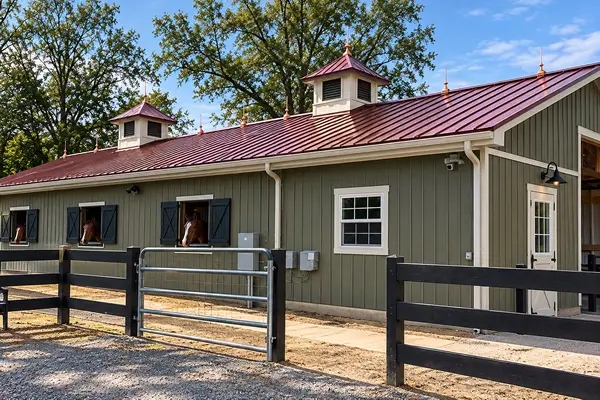
If your barn or agricultural building already has lightning protection, periodic inspection can help identify components that have become damaged, disconnected or altered.
An inspection is particularly worth considering after:
- Roof replacement
- Major roof repairs
- Building additions
- Storm damage
- Renovations
- Installation of new rooftop equipment
- Structural modifications
- Work that may have disturbed existing lightning protection components
Roof work is especially important because contractors can inadvertently move or disconnect parts of an existing lightning protection system.
One Ranch May Need More Than One Solution
A Colorado ranch may have a residence, several barns, a riding arena, equipment storage buildings and workshops spread across many acres.
That doesn’t mean every structure automatically requires an identical system.
A professional evaluation can consider the individual buildings, their construction and how the property is used. From there, the property owner can determine which structures should be prioritized.
This is one reason Deseret approaches agricultural lightning protection on a property-by-property basis rather than offering a one-size-fits-all solution.
Colorado Barn & Ranch Lightning Protection
Deseret Lightning Protection provides lightning protection services for agricultural and equestrian properties throughout Colorado, including the Denver area, Colorado Springs, Fort Collins, Boulder, Castle Rock, Parker, Greeley, Pueblo and surrounding communities.
We also work with ranches, farms and rural properties outside major metropolitan areas.
Our services include lightning protection system design, installation, inspections, maintenance, repairs, retrofits, upgrades, grounding and bonding for new and existing structures.
Protecting Your Colorado Barn, Ranch or Equestrian Property
If you own a barn, ranch, farm, horse property or equestrian facility in Colorado, Deseret Lightning Protection can evaluate your structures and discuss appropriate lightning protection options.
Whether you’re constructing a new horse barn, protecting an existing ranch building, or need an older lightning protection system inspected or repaired, our team can help.
Contact Deseret Lightning Protection at (435) 219-4421 to discuss lightning protection for your Colorado property.
FAQs – Colorado Barn & Ranch Lightning Protection
Do barns in Colorado need lightning protection?
Not every barn has the same level of lightning exposure, but barns located in open or elevated areas may be more vulnerable during thunderstorms. A professional evaluation can consider the barn’s location, construction, size, roofing materials and surrounding structures to determine an appropriate lightning protection solution.
Can lightning protection be installed on a metal barn?
Yes. Lightning protection systems can be installed on many types of metal barns and agricultural buildings. A metal roof by itself is not a complete lightning protection system. Properly designed systems may include air terminals, conductors, bonding and grounding components.
Can you install lightning rods on an existing horse barn?
Yes. Lightning protection can often be retrofitted to existing horse barns, stables and equestrian facilities. The system should be designed around the building’s construction, roof configuration and existing conditions.
Should a horse stable have a lightning protection system?
Horse stables can be good candidates for lightning protection, particularly when they are large, isolated or situated in exposed areas. A professionally designed system provides a controlled path for lightning current to travel toward the ground.
Can one lightning protection system protect an entire ranch?
Generally, individual structures need to be evaluated separately. A ranch may include a residence, barns, riding arena, equipment buildings and workshops spread across a large property. Deseret Lightning Protection can evaluate the property and help determine which structures should be prioritized.
When is the best time to install lightning protection on a new barn?
During construction is an excellent time to plan a lightning protection system. Installation can be coordinated with the builder, roofer and other contractors, allowing components to be incorporated into the building as construction progresses.
Should an existing barn lightning protection system be inspected?
Yes. An inspection is particularly worthwhile after roof replacement, renovations, storm damage, building additions or other work that may have disturbed the system. Older systems can also be inspected for damaged, disconnected or missing components.
Does Deseret Lightning Protection serve ranches and equestrian properties throughout Colorado?
Yes. Deseret Lightning Protection provides lightning protection services for barns, farms, ranches, horse properties and equestrian facilities throughout Colorado, including the Denver area, Colorado Springs, Fort Collins, Boulder and surrounding communities.