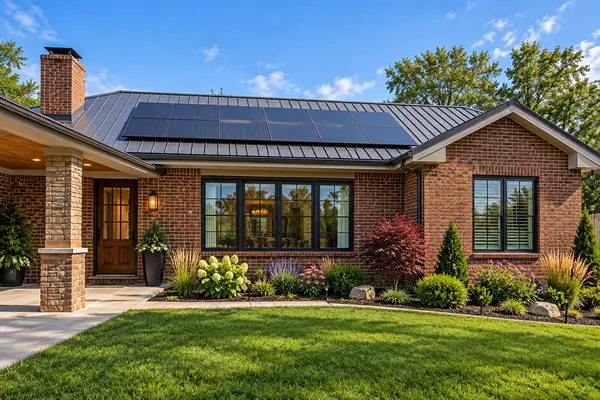
Solar panels are a natural fit for Arizona. With abundant sunshine and a growing number of homes using rooftop photovoltaic (PV) systems, solar has become a familiar sight throughout Phoenix, Scottsdale, Mesa, Chandler, Gilbert, Tucson, Prescott, Flagstaff, and communities across the state.
But Arizona homeowners also face another powerful force of nature: lightning during monsoon thunderstorms.
If you have invested in rooftop solar, you may be wondering:
Can lightning damage solar panels?
The short answer is yes. A direct lightning strike can cause significant damage, but a nearby lightning strike may also create electrical surges capable of affecting solar equipment and other electrical systems within a home.
Understanding lightning protection, grounding, bonding, and surge protection can help Arizona solar homeowners make informed decisions about protecting their property.
Can Solar Panels Be Damaged by Lightning?
Yes. Solar panels and photovoltaic systems contain interconnected electrical components that can potentially be affected by lightning.
Damage may result from a direct lightning strike to the home or solar array, but a direct strike is not the only concern. Lightning occurring nearby can also create transient electrical surges.
Depending on the circumstances, lightning-related electrical energy can potentially affect:
- Solar panels
- Solar inverters
- Optimizers and microinverters
- Electrical wiring
- Combiner equipment
- Battery storage systems
- Main electrical panels
- HVAC equipment
- Smart-home systems
- Security systems
- Appliances and electronics
This is why protecting a solar-equipped home from lightning involves more than simply considering the solar panels themselves.
The entire electrical and structural system should be evaluated as a whole.
Why Lightning Protection Matters for Arizona Solar Homes
Arizona’s sunny climate makes solar attractive, but summer monsoon season brings a very different weather pattern.
Thunderstorms can develop rapidly and produce frequent lightning, high winds, dust, heavy rain, and other severe weather.
Homes with rooftop solar contain additional electrical equipment and rooftop components. When evaluating lightning protection for these properties, consideration should be given to how the solar array interacts with the home’s:
- Roof
- Electrical system
- Grounding
- Lightning protection system
- Surge protection
- Inverter
- Battery storage
- Other rooftop equipment
A properly designed system should take all of these elements into account.
Does Having Solar Panels Make Your Home More Likely to Be Struck by Lightning?
Installing solar panels does not mean that lightning will automatically strike your home.
Lightning behavior is influenced by many factors, including thunderstorm conditions, structure height, surrounding terrain, nearby objects, and other environmental characteristics.
However, solar panels represent valuable electrical equipment located on one of the most exposed portions of your property: the roof.
The question is therefore less about whether solar panels “attract” lightning and more about what happens to your home and solar equipment if lightning strikes the structure or creates a nearby electrical surge.
Can a Direct Lightning Strike Destroy a Solar System?
A direct lightning strike can carry an enormous amount of electrical energy.
If a home or solar array receives a direct strike without an appropriately designed lightning protection system, the electrical energy may find unintended paths through conductive materials.
Potential consequences can include damage to the solar equipment, electrical system, building materials, and other components of the property.
A professionally designed lightning protection system provides a designated path for lightning current to travel toward ground.
Rather than attempting to stop lightning, the objective is to intercept and safely conduct the lightning current to earth.
What About a Nearby Lightning Strike?
This is an important issue that homeowners sometimes overlook.
Lightning does not necessarily have to strike your solar panels directly to cause problems.
A nearby lightning event can create transient overvoltages that may enter or become induced in electrical and electronic systems.
Modern solar installations rely on sophisticated electronics, particularly inverters and other control equipment. Those components can be sensitive to electrical surges.
This is one reason surge protection is an important consideration for solar-equipped homes.
Lightning Protection vs. Surge Protection for Solar Panels
Lightning protection and surge protection are related, but they are not the same thing.
Structural Lightning Protection
A structural lightning protection system is designed to intercept a lightning strike and provide controlled conductive paths toward ground.
A complete system may incorporate:
- Air terminals
- Conductors
- Grounding electrodes
- Bonding
- Connections
- Surge protective devices
Surge Protection
Surge protective devices are designed to help limit transient overvoltages that could otherwise reach electrical and electronic equipment.
For a solar-equipped home, surge protection may be considered at multiple points within the electrical system depending on the design.
Neither should automatically be viewed as a replacement for the other.
For properties where comprehensive lightning protection is desired, structural lightning protection and appropriate surge protection work together as different layers of protection.
What Does NFPA 780 Say About Solar Panels?
Lightning protection for photovoltaic systems is not something that should be improvised.
NFPA 780 – Standard for the Installation of Lightning Protection Systems includes provisions addressing solar arrays and their electrical and mechanical systems.
Depending on the system, considerations may include maintaining appropriate separation or bonding, positioning lightning protection components in relation to the solar array, conductor routing, grounding, and surge protection.
This is particularly important because adding solar panels to a home that already has lightning protection—or adding lightning protection to a home that already has solar—requires coordination between the systems.
Can Lightning Rods Be Installed Around Solar Panels?
Yes. A professionally designed lightning protection system can often be installed on a home with an existing rooftop solar array.
However, the layout should be designed specifically for the property.
Air terminals cannot simply be placed randomly around solar panels.
The lightning protection professional must consider factors such as:
- Roof configuration
- Solar array location
- Roof peaks and ridges
- Chimneys
- Mechanical equipment
- Existing electrical systems
- Conductor routing
- Grounding
- Bonding
- Required protection zones
The objective is to protect the structure while properly integrating the solar installation into the overall design.
What If My Arizona Home Already Has Solar Panels?
Lightning protection can often be retrofitted onto an existing home.
If your solar panels are already installed, a lightning protection professional can evaluate the roof and determine how a system could be incorporated around the existing array.
This is common with homes that add lightning protection after construction.
A professional assessment can also identify grounding, bonding, and surge-protection considerations that may need to be addressed.
What If I Already Have Lightning Protection and Want to Add Solar?
This situation also requires careful planning.
Adding solar panels can change the rooftop configuration of a home that already has a lightning protection system.
Existing air terminals, conductors, bonding, and other components may need to be evaluated to determine whether modifications are necessary.
Do not simply move or remove existing lightning protection components to make room for solar panels.
Before installing the solar array, it is advisable to have the existing lightning protection system evaluated so that the solar installer and lightning protection professional can coordinate the project.
Are Solar Inverters Vulnerable to Lightning Surges?
The inverter is one of the most important components of a solar energy system.
It converts the direct current (DC) electricity produced by solar panels into alternating current (AC) electricity that can be used by the home.
Because inverters contain electronic components, electrical surges are an important consideration.
Appropriate surge protection can help reduce exposure to transient overvoltages associated with lightning and other electrical disturbances.
What About Arizona Homes With Solar Batteries?
Battery storage is becoming increasingly common with residential solar installations.
Homes with solar plus battery storage contain additional equipment that should be considered when evaluating the property’s electrical protection strategy.
A comprehensive assessment may need to consider:
- Solar panels
- Inverter equipment
- Battery storage
- Electrical panels
- Disconnects
- Grounding
- Bonding
- Surge protection
- Structural lightning protection
As homes become increasingly dependent on interconnected electronic systems, protecting the property as an integrated system becomes even more important.
Is a Whole-House Surge Protector Enough for Solar Panels?
A whole-house surge protector can be an important component of electrical protection, but it should not automatically be considered a substitute for structural lightning protection.
The two systems perform different functions.
Surge protection helps manage transient overvoltages.
Structural lightning protection provides a controlled path to ground for lightning current when the structure is struck.
For an Arizona homeowner concerned about both direct lightning strikes and electrical surges, it makes sense to evaluate the property comprehensively rather than relying on a single device.
Which Arizona Solar Homes Should Consider a Lightning Protection Assessment?
Every property is different, but a professional assessment may be particularly worthwhile for homes with:
- Large rooftop solar arrays
- Solar battery storage
- Expensive inverter systems
- Large or complex roofs
- Multiple roof elevations
- Exposed locations
- Hillside or elevated properties
- Extensive smart-home technology
- High-value electronics
- Pool and outdoor entertainment systems
- Detached structures
- Previous lightning or surge damage
- Frequent nearby thunderstorm activity
Custom and luxury homes can also contain substantial investments in electronics, automation, security, HVAC, pool equipment, landscape systems, and solar technology.
Protecting the home means considering much more than the replacement cost of the solar panels.
Lightning Protection for Solar Homes in Phoenix and Scottsdale
Solar installations are common throughout the Phoenix metropolitan area, including Scottsdale, Paradise Valley, Mesa, Gilbert, Chandler, Tempe, Queen Creek, and surrounding communities.
These homes can range from relatively simple single-story properties to large custom residences with complex rooflines, solar arrays, battery systems, pools, outdoor living areas, and sophisticated home automation.
Lightning protection should be designed for the specific architecture and electrical configuration of the property rather than using a one-size-fits-all approach.
What About Solar Homes in Tucson?
Tucson and Southern Arizona also experience monsoon thunderstorms and lightning.
Solar-equipped homes in Tucson, Oro Valley, Marana, Sahuarita, and surrounding areas can benefit from the same comprehensive approach: evaluating structural lightning protection, grounding, bonding, and surge protection together.
Solar Panels and Arizona Monsoon Season
Arizona’s monsoon season is an important reminder that living in a sunny climate does not eliminate the threat of severe thunderstorms.
Lightning is unpredictable.
Homeowners cannot control where lightning strikes, but they can evaluate their property’s vulnerability and take steps to reduce potential damage.
If you have invested thousands of dollars in solar panels, battery storage, electronics, smart-home equipment, and other electrical systems, it makes sense to consider how those investments fit into your overall lightning protection strategy.
Professional Lightning Protection for Arizona Solar Homes
Protecting a solar-equipped home requires more than placing lightning rods beside solar panels.
The entire structure should be considered, including the roof, solar array, electrical system, grounding, bonding, surge protection, inverter equipment, and other conductive systems.
Deseret Lightning Protection provides professional lightning protection services for homes and properties throughout Arizona.
Our services include:
- Lightning protection system design
- Lightning protection installation
- Residential lightning protection
- Commercial lightning protection
- Grounding and bonding
- Lightning protection retrofits
- System inspections
- Maintenance and repairs
- Lightning protection for solar-equipped properties
Whether you already have rooftop solar or are planning a new solar installation, having your property evaluated can help determine the appropriate approach to lightning protection.
Contact Deseret Lightning Protection to discuss lightning protection for your Arizona home or solar-equipped property.
Frequently Asked Questions About Solar Panels and Lightning
Can lightning destroy solar panels?
A direct lightning strike can potentially damage solar panels and other components of a photovoltaic system. Nearby lightning can also create transient electrical surges capable of affecting sensitive electronic equipment.
Do solar panels attract lightning?
Solar panels do not inherently attract lightning simply because they generate electricity. However, they are installed in an exposed rooftop location and should be considered when designing a lightning protection system.
Can lightning rods be installed on a house with solar panels?
Yes. Lightning protection can be designed for homes with solar panels. The solar array, roof configuration, grounding, bonding, conductor routing, and other factors should be evaluated when designing the system.
Will a surge protector protect solar panels from lightning?
Surge protective devices can help protect electrical systems against transient overvoltages, but surge protection and structural lightning protection serve different purposes. A comprehensive system may incorporate both.
Can lightning protection be added after solar panels are installed?
Yes. Lightning protection can often be retrofitted onto a home with an existing solar array. A professional evaluation is needed to determine the appropriate system layout.
Should I have my lightning protection system checked before installing solar?
Yes. If your home already has a lightning protection system, it is advisable to have it evaluated before solar installation. Changes to the roof can affect the existing lightning protection layout, and coordination between the solar installer and lightning protection professional may be necessary.
Do solar batteries need lightning and surge protection?
Battery storage and associated electronics should be considered as part of the home’s overall electrical and lightning protection strategy. Appropriate protection depends on the design and configuration of the individual system.
Protect Your Arizona Property with Professional Lightning Protection
Whether you own a home, commercial property, ranch, or other structure in Arizona, a properly designed lightning protection system can provide an important layer of protection for your property. Deseret Lightning Protection provides professional system design, installation, inspections, repairs, and maintenance throughout the state. Learn more about our Arizona Lightning Protection services and contact our team to discuss the right solution for your property.